Skip to content

Research

Planned Investigation Themes

Frontier Spacetime Technologies is developing a multidisciplinary programme spanning theoretical physics, precision measurement, quantum science, nuclear physics, advanced materials and aerospace engineering.

The seven themes below describe where the organisation intends to look. They are research questions rather than positions, and none of them asserts that a new effect exists. Emphasis rests on laboratory-scale phenomena capable of experimental investigation rather than on assumptions about eventual applications.

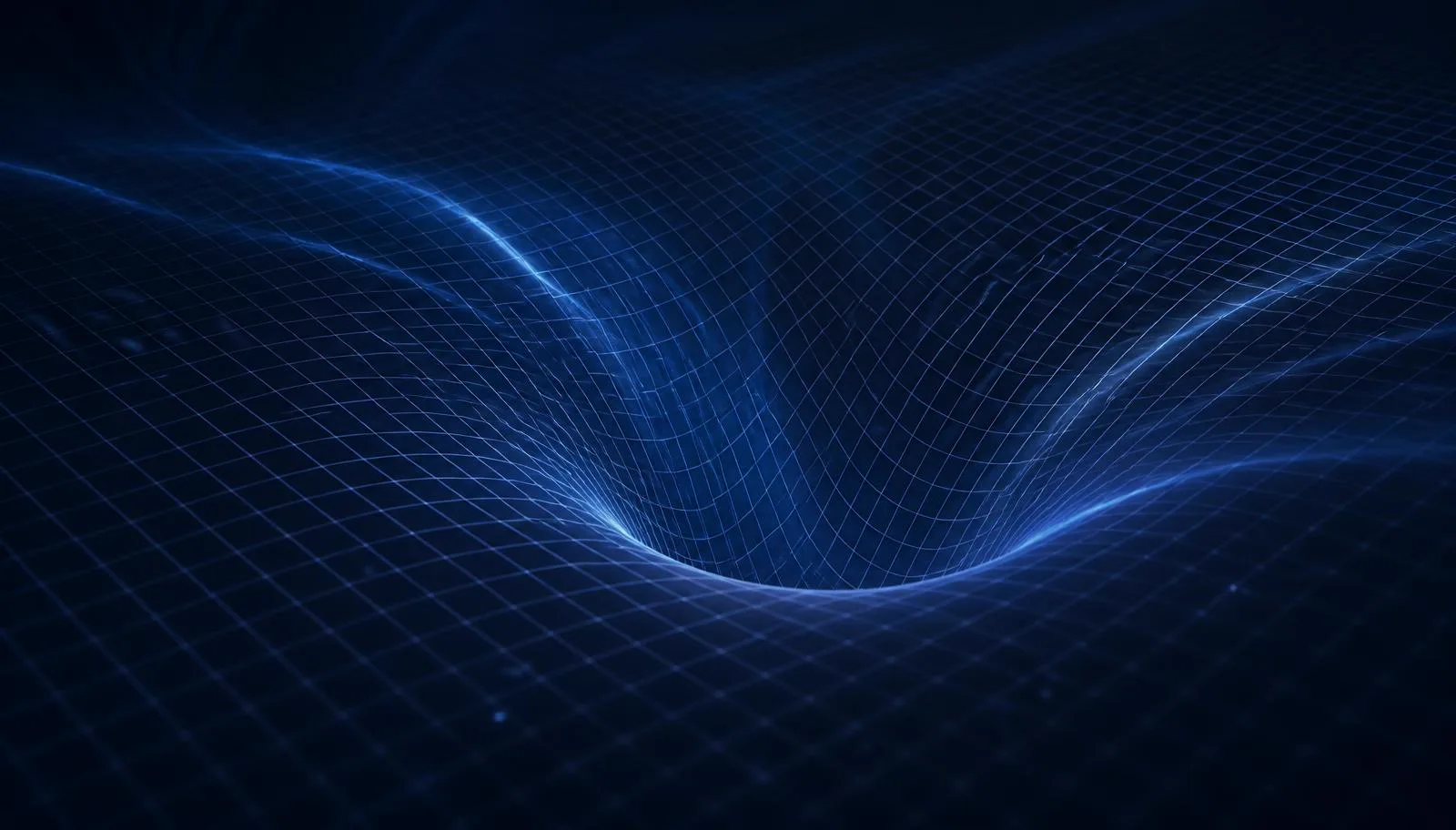
Visualisation of a luminous measurement grid curving into a gravitational well

01Matter

Matter & Nuclear Structure

This theme examines whether unusual nuclear configurations, isotopic structures, superheavy nuclei or other states of matter exhibit measurable field, inertial or gravitational characteristics worthy of further scientific investigation.

Work would begin with literature review and theoretical modelling, including predicted islands of nuclear stability. No assumption is made that any particular element or isotope possesses unusual properties; the purpose is to establish what current evidence does and does not constrain.

Questions this theme would test

  • Do any established measurements leave room for unmodelled effects in exotic nuclear states?
  • What measurement precision would be required to test such a question meaningfully?

Rendered cluster of nucleons forming an atomic nucleus, lit in electric blue against deep navy

Programme in Development

  • Research Projects
  • Scientific Papers
  • Experiments
  • Research Updates
  • Collaborating Institutions
  • Results

02Quantum Fields

Quantum Fields & the Vacuum

This theme concerns experimentally established vacuum phenomena and the theoretical frameworks describing quantum fields, vacuum energy and Casimir-type effects.

The question under investigation is whether controllable physical configurations can produce force, energy-density or field effects that are measurable above noise, and whether any measurement departs from the prediction of established theory. Existing theory is treated as the baseline against which results are compared, not as an obstacle to be argued around.

Questions this theme would test

  • Which vacuum effects are already measurable at laboratory scale, and with what uncertainty?
  • Can geometry or materials modify those effects in a predictable, reproducible way?
Abstract visualisation of fine blue field lines converging in an interference pattern

Programme in Development

  • Research Projects
  • Scientific Papers
  • Experiments
  • Research Updates
  • Collaborating Institutions
  • Results

03Gravity

Gravity & Precision Measurement

Gravity is the weakest of the known interactions and the hardest to measure precisely at laboratory scale. This theme is concerned with the instrumentation and methodology required to place tighter limits on gravitational behaviour in the laboratory.

The realistic near-term outcome of such work is an improved bound rather than a discovery. Tighter bounds are a scientifically useful result in their own right, and are published as such.

Questions this theme would test

  • What is the smallest gravitational signal a well-controlled laboratory apparatus can resolve today?
  • Which systematic errors dominate, and how are they characterised and reported?
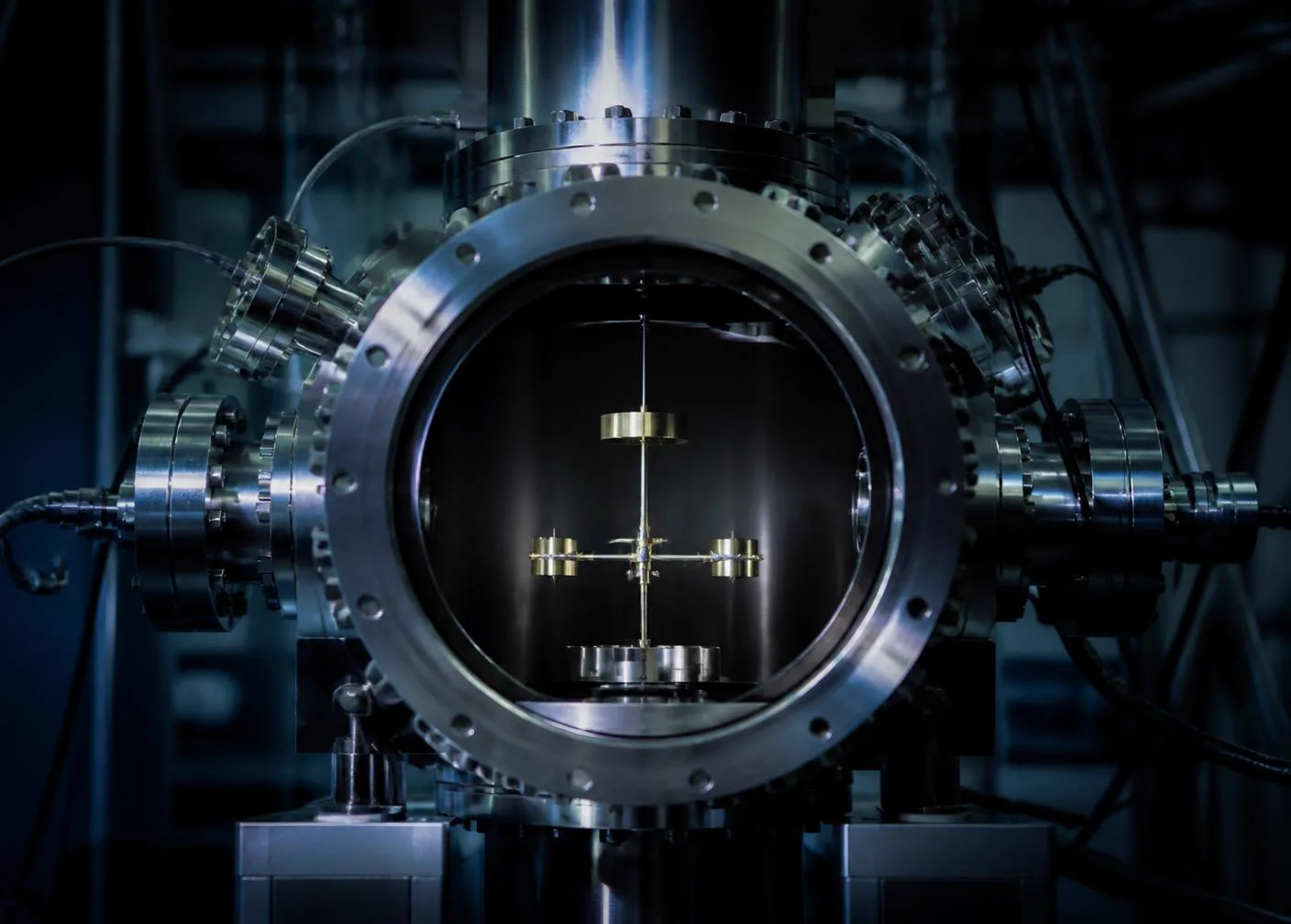
A torsion balance apparatus suspended inside a stainless steel vacuum chamber in a laboratory

Programme in Development

  • Research Projects
  • Scientific Papers
  • Experiments
  • Research Updates
  • Collaborating Institutions
  • Results

04Inertia

Inertia & Mass

Inertia is exceptionally well described by existing physics, yet its origin remains a subject of legitimate theoretical discussion. This theme reviews those discussions and asks what, if anything, is experimentally testable at laboratory scale.

Any experiment in this area must first demonstrate that its apparatus can reproduce the standard result to high precision. Claims of anomalous inertial behaviour have a long history of resolving into instrumentation artefacts, and that history informs the methodology adopted here.

Questions this theme would test

  • What precision is required before a deviation from expected inertial behaviour could be claimed?
  • How can thermal, electromagnetic and vibrational artefacts be excluded convincingly?
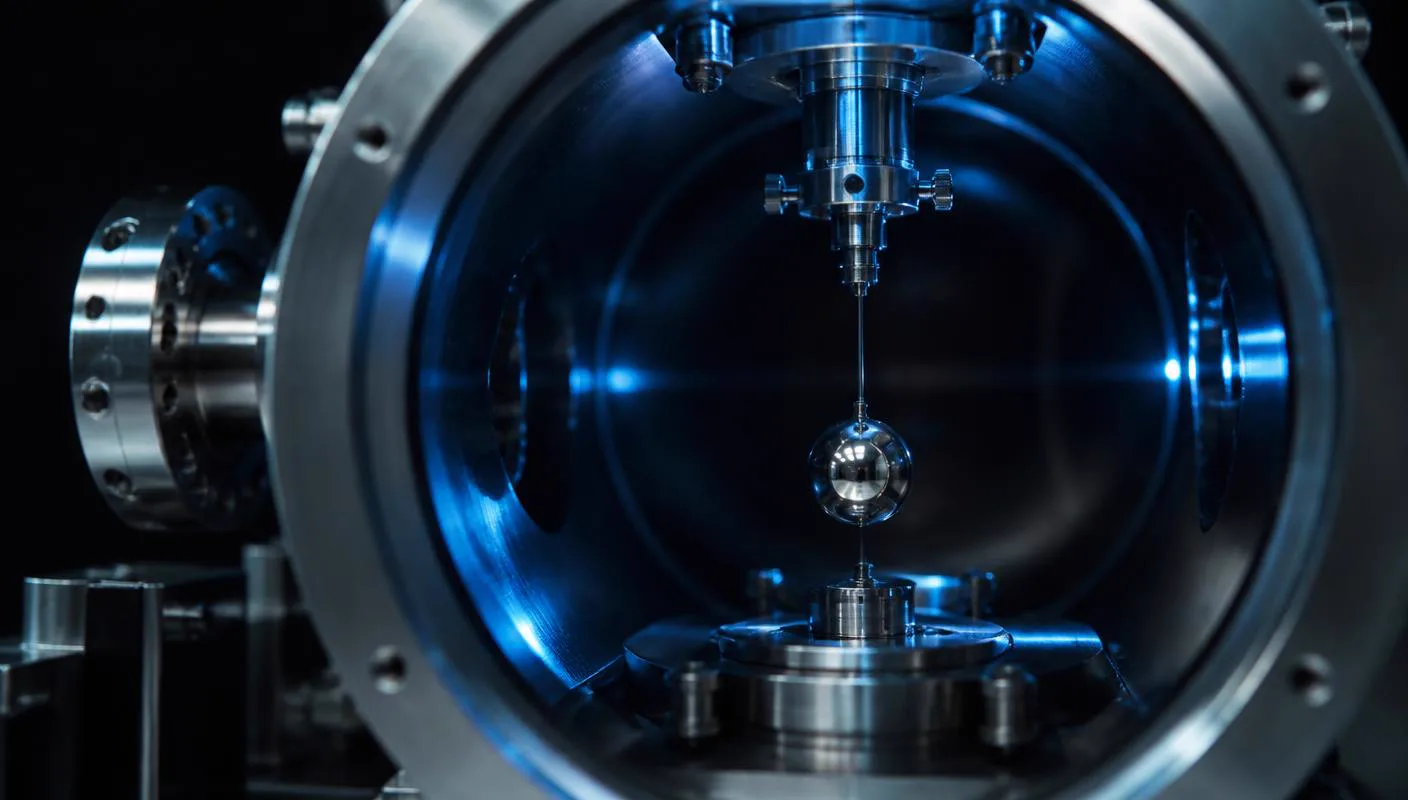
Suspended polished test mass on a fine fibre inside a stainless steel vacuum chamber

Programme in Development

  • Research Projects
  • Scientific Papers
  • Experiments
  • Research Updates
  • Collaborating Institutions
  • Results

05Advanced Materials

Engineered & Quantum Materials

Engineered materials routinely produce collective behaviour absent from their constituents. This theme investigates metamaterials, superconducting systems, quantum materials and purpose-built structures with that established principle as its starting point.

The near-term interest is practical: materials and structures that improve sensitivity, isolation or field control in the experiments described elsewhere in this programme.

Questions this theme would test

  • Which engineered structures measurably alter local field behaviour under controlled conditions?
  • Can such materials improve the sensitivity of precision measurement apparatus?
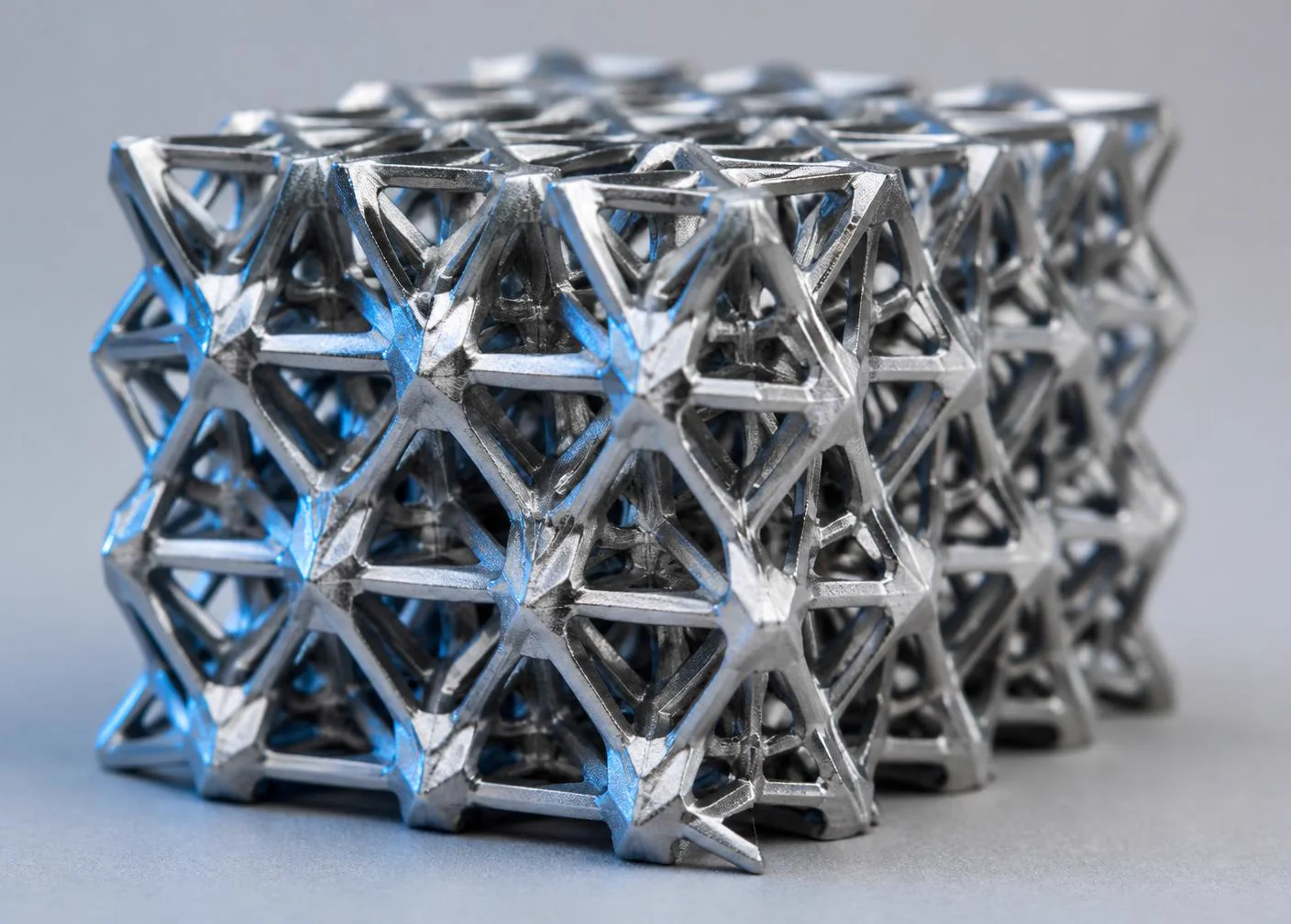
Close-up of an engineered metamaterial lattice with repeating geometric cells

Programme in Development

  • Research Projects
  • Scientific Papers
  • Experiments
  • Research Updates
  • Collaborating Institutions
  • Results

06Spacetime Geometry

Spacetime Geometry

General relativity admits mathematical solutions — including metrics discussed in the literature under headings such as wormhole and warp geometries — whose physical realisability is heavily constrained by energy conditions and other requirements.

This theme studies those constraints carefully. Its purpose is to distinguish what is mathematically permitted from what is physically feasible, and to identify whether any experimentally accessible question follows from that distinction.

  • spacetime metrics
  • energy conditions and constraints
  • wormhole geometries
  • warp-type geometries
  • effective-distance concepts

Questions this theme would test

  • Which constraints rule out particular geometries, and how firmly are those constraints established?
  • Does any part of this analysis produce a testable laboratory-scale prediction?
Visualisation of a luminous grid curving into a gravitational well against deep navy

Programme in Development

  • Research Projects
  • Scientific Papers
  • Experiments
  • Research Updates
  • Collaborating Institutions
  • Results

07Advanced Propulsion Physics

Advanced Propulsion Physics

This theme reviews advanced propulsion concepts described in the scientific and engineering literature and assesses them against established physics, available evidence and measurement feasibility.

Frontier Spacetime Technologies makes no claim that a non-conventional propulsion mechanism exists. The purpose of this theme is assessment: to record what has been examined, what has been eliminated and on what evidential basis, so that effort is directed toward questions that remain genuinely open.

Questions this theme would test

  • Which proposed mechanisms are already excluded by existing measurement, and by which results?
  • Which remaining questions can be reduced to a laboratory-scale, falsifiable experiment?
The curved limb of Earth at night with a thin blue atmospheric glow against space

Programme in Development

  • Research Projects
  • Scientific Papers
  • Experiments
  • Research Updates
  • Collaborating Institutions
  • Results

Anomalous Aerospace Phenomena

Unidentified Anomalous Phenomena

Frontier Spacetime Technologies recognises Unidentified Anomalous Phenomena (UAP), historically and popularly referred to as UFOs, as a legitimate scientific subject.

Most reported observations are likely to have conventional explanations. Others remain unresolved because the available evidence is incomplete, contradictory or presently unexplained.

Frontier considers credible anomalous aerospace observations a legitimate cross-disciplinary research question spanning propulsion, inertia, field effects, advanced materials and spacetime physics.

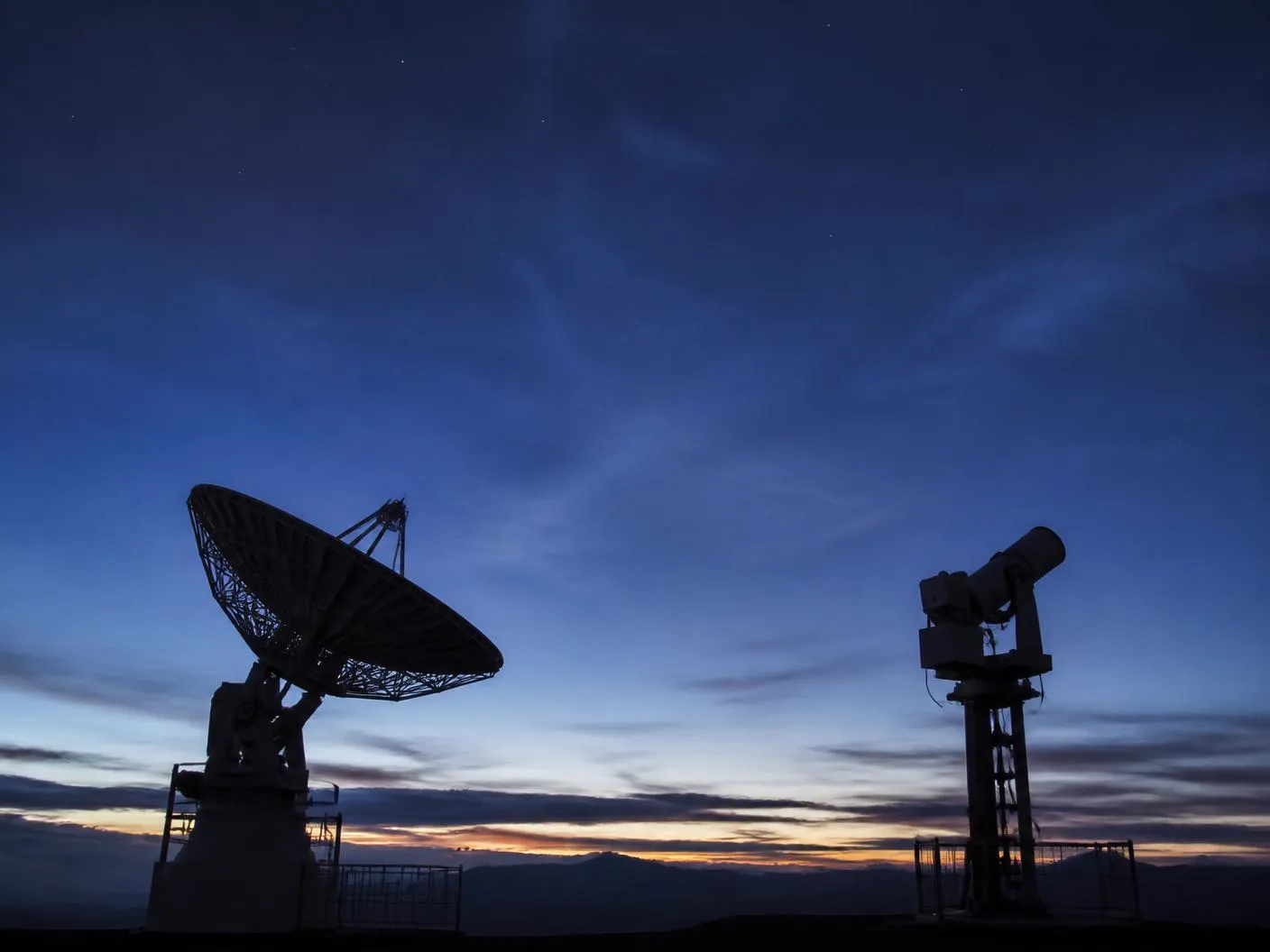
Ground-based radar dish and optical tracking instrument silhouetted against a twilight sky
  • Gravity and Inertia

    Could unusual observations reveal previously unknown interactions involving inertia, gravitational effects or acceleration?

  • Electromagnetic and Field Effects

    Could some observations involve unusual electromagnetic, plasma, quantum or other field phenomena?

  • Advanced Materials

    Could physical evidence, where legitimately available and scientifically documented, reveal unusual material properties or manufacturing processes?

  • Propulsion Physics

    Could observations of apparently unconventional movement provide testable questions for advanced propulsion research?

  • Spacetime Physics

    Could any reproducibly demonstrated physical phenomenon eventually require examination within broader concepts involving spacetime geometry or effective distance?

The appropriate response is neither belief nor disbelief. It is measurement, investigation and understanding.

Scientific Position

Research Questions, Not Conclusions

Frontier Spacetime Technologies makes no assumption that any particular material, element, quantum state or physical mechanism possesses exotic properties.

Promising hypotheses will be evaluated theoretically and experimentally.

Negative results are scientifically valuable when they eliminate mechanisms, prevent resources being wasted and help concentrate subsequent research.

We do not presume that such mechanisms exist. Our purpose is to find out.